
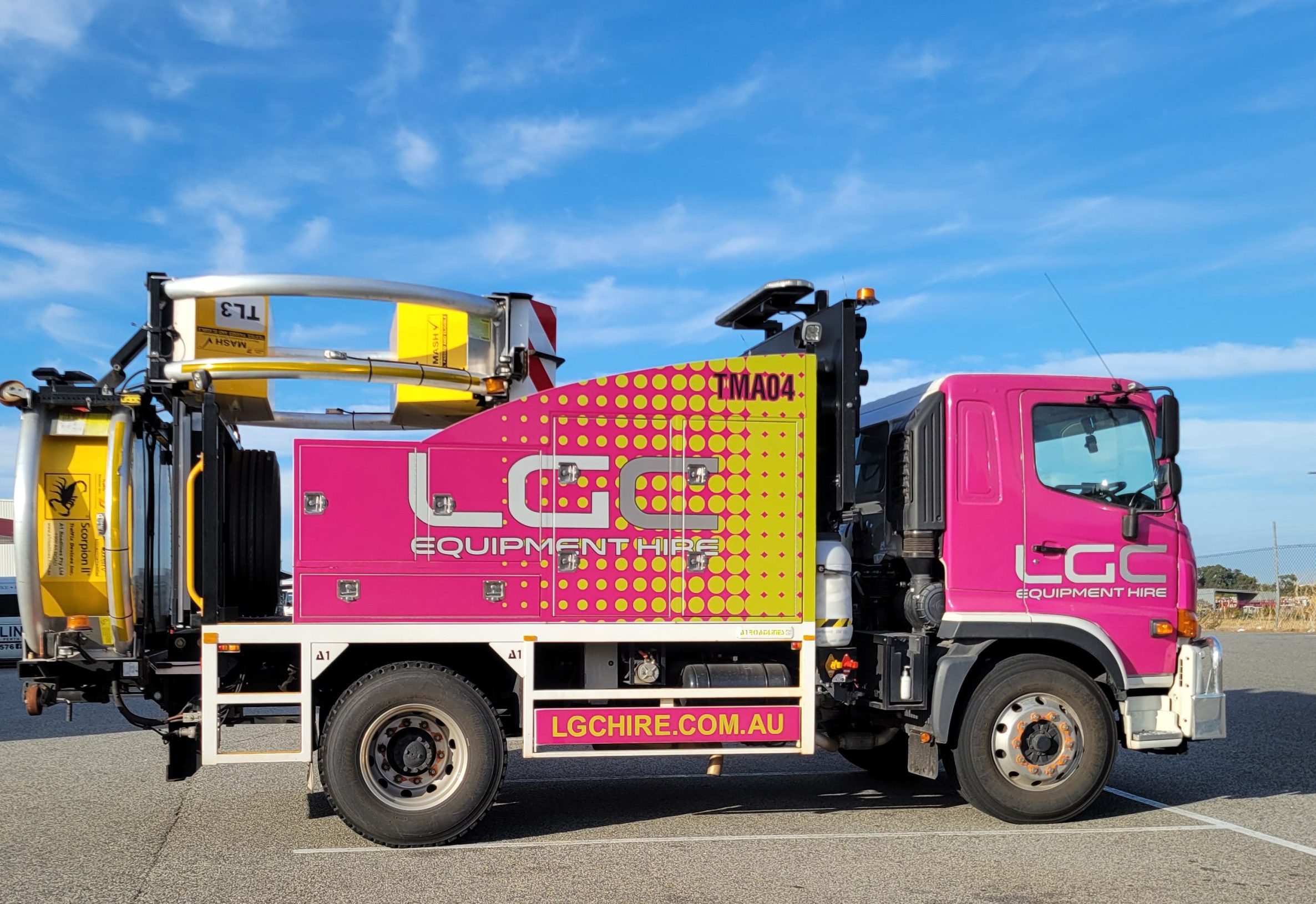
The Truck-Mounted Attenuator (TMA) is an essential tool that contributes to safety and effective traffic management on a worksite. Serving as a critical line of defence between traffic and the crew, the TMA provides a physical, energy-absorbing barrier that reduces accident severity, protecting both vehicle occupants and road workers.
However, the effectiveness of a TMA does not only rely on its engineering but also on its strategic placement and the competence of its operator. As road infrastructure projects become more complex, understanding the role of the TMA is crucial for planning, minimising risk, and defining work zones.
How TMAs Work
TMAs are specialised safety barriers designed to absorb kinetic energy during a vehicle collision. The TMA features crushable, engineered cartridges filled with energy-absorbing materials that compress upon impact, bringing the vehicle to a stop and preventing it from rebounding onto oncoming traffic. Without a TMA, energy from a high-speed vehicle entering the worksite will be directed into the work crew or machinery, placing both workers and the driver at extreme risk.
Benefits of TMAs on a Worksite
While the main purpose of TMAs is life-saving, they can provide many other benefits when integrated into a traffic management plan:
- Personnel Protection: TMA provides a physical buffer that allows road workers to focus on their work, shielding them from rear-end collisions.
- Public Safety: TMAs are designed to protect the public just as much as the crew. By providing a survivable impact zone, they decelerate a vehicle in a way that minimises injury to the driver.
- High-Visibility Communication: Equipped with advanced lighting systems and arrow boards, TMAs act as a massive visual cue that directs traffic safely around the site before an accident can occur.
Competent Operation
A TMA is only as effective as the person operating it. Like all equipment used in traffic management and high-risk environments, competent operation is essential for site safety.
A TMA operator does more than just drive the truck; they must possess a deep understanding of strategic positioning. By precisely calculating the roll-ahead (the distance that the TMA vehicle will travel forward if struck from behind), it ensures that the truck is parked at the optimal distance from workers.
Because a TMA is a specialised piece of emergency equipment, trained operators are responsible for ensuring all parts of the attenuator are in perfect working order, the lights are functioning, and the vehicle’s braking system is prepared for an impact. In addition to proper system setups and inspections before operation, operators must maintain active vigilance throughout their shift, keeping an eye on the entire site. This includes being prepared to use warning systems, such as high-intensity strobes, to alert drivers and providing immediate radio alerts to the ground crew.
Ultimately, professional training ensures that every operator is fully certified and prepared to handle the technical and safety demands of a high-speed work zone. At Workmate Training Academy, our TMA course provides participants with the skills and knowledge to operate a TMA in Western Australia. Our TMA course comprises a theory component and a practical component, ensuring that participants are not only certified but also confident in their ability to manage a work zone. Upon successful completion of this course, participants will be issued a MRWA Accreditation Certificate and Card for Operate Truck Mounted Attenuator (OTMA).
Contact us today to learn more about our courses.
Read more on our other blogs: